Not all e-moto batteries are created equal. Two batteries can share the same voltage, amp-hour capacity, and overall energy rating while delivering very different performance on the trail.
For riders upgrading a Surron Light Bee or another electric dirt bike, understanding how batteries store and deliver energy is essential. Voltage and capacity are important, but so are the cells inside the pack, how they're arranged, and how much current the complete battery can safely deliver.
Here's a closer look at the numbers that matter and what they mean for real-world performance.
Battery Voltage, Capacity, and Energy
Before comparing battery performance, it helps to understand a few fundamental electrical measurements:
- Voltage (V): Electrical potential. Along with current, voltage determines how much electrical power can be delivered.
- Amp-hours (Ah): A measurement of battery charge capacity. Higher amp-hour ratings generally mean more available energy when voltage is comparable.
- Watt-hours (Wh): A measurement of stored energy, calculated by multiplying nominal voltage by amp-hours.
- Current (A): The amount of electrical current flowing from the battery.
- Power (W or kW): The rate at which electrical energy is delivered, calculated by multiplying voltage by current.
For example, a 72V 50Ah battery has a nominal energy capacity of:
72V × 50Ah = 3,600Wh (3.6kWh)
Watt-hours provide a more useful basis for comparing stored energy than amp-hours alone, particularly when comparing batteries with different voltages. Actual usable energy will depend on operating conditions, discharge limits, and other factors.
How Series and Parallel Battery Configurations Work
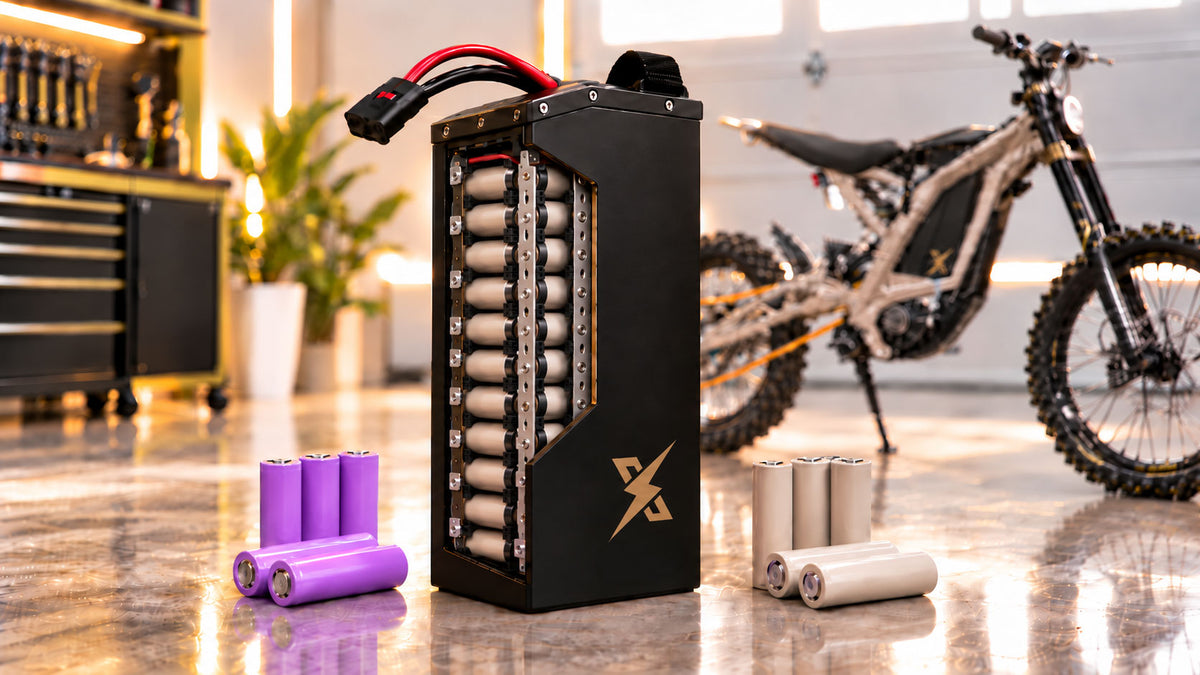
Most high-performance e-moto batteries use multiple lithium-ion cells connected in a series-parallel arrangement. The configuration determines the pack's nominal voltage, capacity, and how current is shared among its cells.
Series (S) connections increase voltage. Connecting cells in series adds their voltages together without increasing the amp-hour capacity of the series string.
Parallel (P) connections increase capacity and allow cells to share the electrical current demanded by the bike.
Example: A 20S10P Battery
Consider a battery built with 21700 lithium-ion cells rated at 3.6V nominal and 5.0Ah each.
- 20S: 20 cell groups connected in series produce 72V nominal (20 × 3.6V).
- 10P: Each series group contains 10 cells in parallel, providing 50Ah (10 × 5.0Ah).
- Total cells: 200 individual cells.
- Nominal energy: 72V × 50Ah = 3,600Wh, or 3.6kWh.

This arrangement illustrates an important distinction: two packs with the same configuration can have identical voltage and capacity ratings, yet very different discharge capabilities.
Samsung 50S vs. Molicel P50B: Why Cell Choice Matters
The individual cell model plays a major role in determining how a battery performs under demanding conditions.
Consider two popular 21700 lithium-ion cells used in performance battery packs: the Samsung INR21700-50S and Molicel INR-21700-P50B.
Both have a nominal voltage of 3.6V and a typical capacity of 5.0Ah, but they are designed with different discharge-performance characteristics.


| Specification | Samsung 50S | Molicel P50B |
|---|---|---|
| Cell format | 21700 | 21700 |
| Nominal voltage | 3.6V | 3.6V |
| Typical capacity | 5.0Ah | 5.0Ah |
| Manufacturer discharge specifications | 25A without temperature cutoff; 45A with 80°C cutoff | 60A with 80°C cutoff |
| Primary consideration | Balanced capacity and power | Higher current capability |
Discharge figures are manufacturer cell-level specifications, not complete battery pack ratings. The stated temperature conditions are important, and these values should not be interpreted as guaranteed sustained output in an enclosed e-moto battery.
In the same 20S10P configuration, both cell types produce approximately 72V, 50Ah, and 3.6kWh on paper. Their ability to deliver that energy under heavy load can differ.
This explains why two batteries with the same voltage and capacity can carry different power ratings. It also explains why the exact cell model matters more than the brand name alone.
How Does Battery Current Become Power?
Battery electrical power follows a simple relationship:
Voltage under load × Battery current = Watts
Divide the result by 1,000 to express power in kilowatts (kW).
At an illustrative 72V under load:
| Battery Current | Electrical Power | Current Per Cell (10P) |
|---|---|---|
| 100A | 7,200W (7.2kW) | 10A |
| 200A | 14,400W (14.4kW) | 20A |
| 300A | 21,600W (21.6kW) | 30A |
As battery current increases, so does the electrical demand on each parallel cell.
Comparing 60V and 72V Systems
For a Surron-style comparison, consider a hypothetical 60V system drawing 7.5kW from its battery:
7,500W ÷ 60V = 125A
At 72V, supplying the same 7.5kW requires:
7,500W ÷ 72V ≈ 104A
The higher-voltage system requires less battery current to deliver the same electrical power.
Now consider a substantially modified bike demanding 20kW from a 72V battery:
20,000W ÷ 72V ≈ 278A
With a 10P configuration:
278A ÷ 10 ≈ 27.8A per cell
These are illustrative electrical calculations, not specifications for every stock Surron Light Bee. Model years vary, and advertised motor power may use a different measurement basis from battery input power.
The important takeaway is that higher power demands more current from each cell unless system voltage, parallel cell count, or both increase.
A cell suitable for a stock-power application may be pushed beyond its intended operating conditions in a heavily modified bike. Battery manufacturers must balance performance with capacity, weight, cost, temperature management, and service life.
Why the Complete Battery Pack Matters
Choosing quality cells is important, but the performance of a finished e-moto battery depends on much more than the cells themselves.
Voltage Sag and Internal Resistance
When a battery supplies current, its voltage drops under load. This is known as voltage sag.
Internal resistance contributes to voltage sag and heat generation. Cells designed for higher power output can help manage these effects, but the pack's connections and construction also influence performance.
This is why meaningful power calculations use voltage under load rather than the battery's resting voltage.
For example, a 72V nominal lithium-ion battery using a typical 20S configuration can measure approximately 84V at full charge, but its operating voltage may be substantially lower during hard acceleration.
Battery Management System (BMS)
The BMS monitors battery operating conditions and provides important protection functions.
Depending on the system, these may include monitoring cell voltages, temperatures, current, and other operating parameters. The BMS can limit or interrupt operation when protection thresholds are reached.
Even when the cells themselves can support high discharge currents, the BMS and overall pack design may impose lower operating limits.
Wiring, Connectors, and Pack Construction
Conductors, electrical connections, and battery assembly also affect how efficiently current can be delivered.
High-current operation places greater demands on the entire electrical path. Undersized conductors, excessive resistance, or unsuitable connections can contribute to heat generation and additional voltage losses.
For that reason, a complete battery's continuous and peak discharge capabilities should be evaluated independently of the individual cell ratings.
Controller and Motor Limitations
A higher-rated battery does not automatically cause a stock bike to produce more power.
The controller determines how much battery current it requests, subject to system limits. The motor, controller, battery, and other electrical components must work together within their operating capabilities.
It's also important to distinguish battery current from motor phase current. Controller phase amps are not the same as amps drawn from the battery. Battery current should be used when calculating electrical input power.
Finally, mechanical power delivered to the wheel is lower than electrical power drawn from the battery because of motor, controller, and drivetrain losses.
What to Look for When Comparing E-Moto Batteries
When selecting an upgraded battery, look beyond the voltage and amp-hour ratings.
- Cell model: Identify the exact cells used, not just the manufacturer.
- Stored energy: Compare watt-hours or kilowatt-hours rather than amp-hours alone.
- Discharge capability: Review the complete pack's continuous and peak battery current ratings.
- Peak rating conditions: Confirm how long peak output is supported and under what operating conditions.
- Thermal management: Consider operating temperature limits and how the pack manages heat.
- Component compatibility: Verify the controller, charger, connectors, wiring, and battery compartment requirements.
The underlying math remains the same as battery technology advances: series connections determine voltage, parallel connections add capacity and share current, and voltage multiplied by current determines electrical power.
Understanding these relationships makes it easier to choose a battery that matches both your riding style and the power demands of your bike.
Real-World Example: Nexbat E-Moto Batteries
These differences are easy to see when comparing battery upgrades that share the same nominal voltage and capacity.
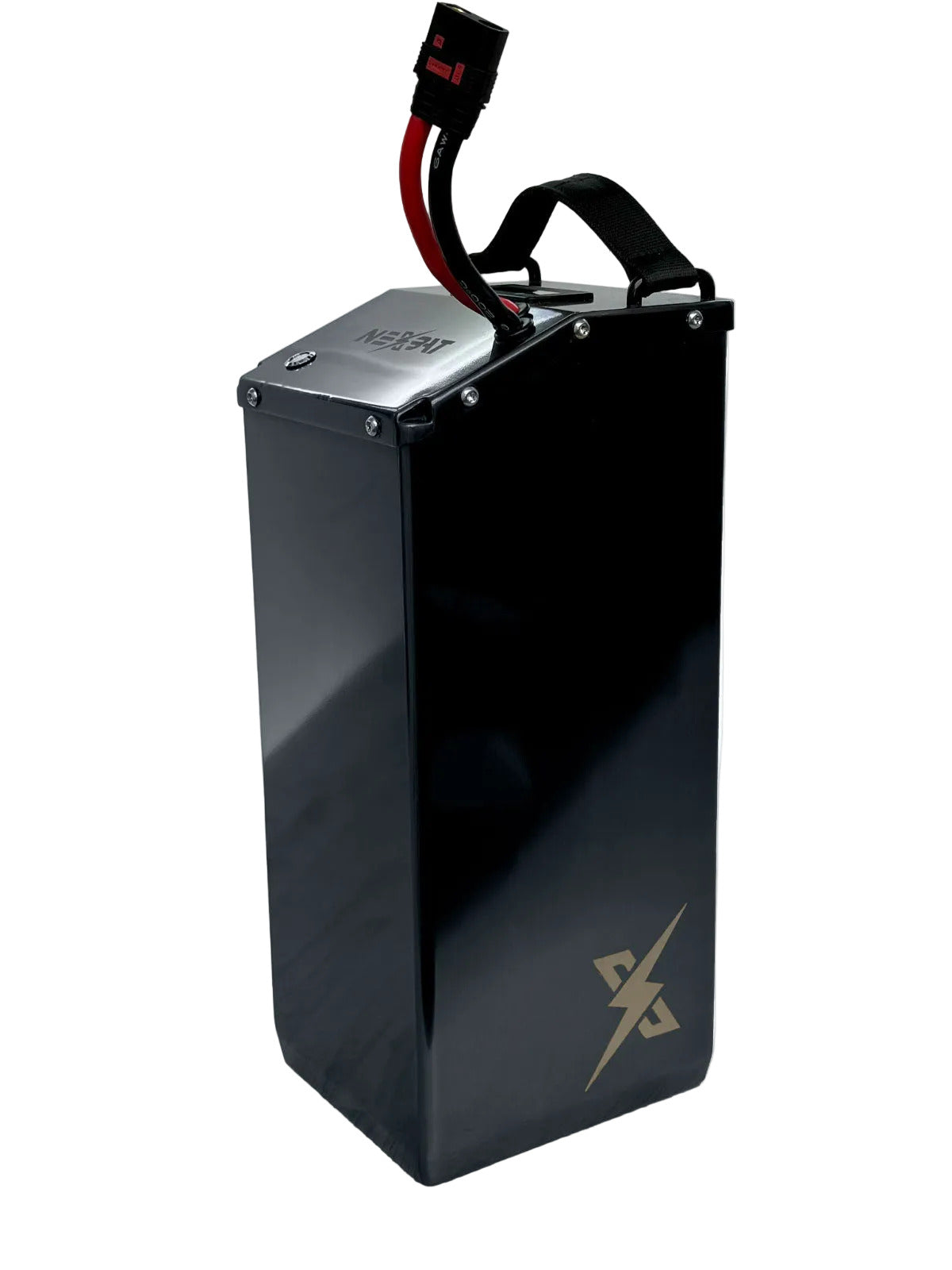
For the Surron Light Bee, Nexbat offers two 72V 50Ah configurations built around different cell models:
- Nexbat 72V 50Ah (Samsung 50S): A balanced performance upgrade suited to trail riding and moderate high-power builds.
- Nexbat 72V 50Ah Pro (Molicel P50B): A higher-discharge configuration designed for demanding power setups, aggressive acceleration, and greater performance upgrade potential.
Both use a 20S10P configuration and provide approximately 3.6kWh of nominal stored energy. However, their differing cell characteristics and complete pack ratings make them better suited to different performance requirements.

Both of these Nexbat 72V configurations require a compatible aftermarket controller and the appropriate 72V charger. Battery selection should always account for the complete electrical system rather than cell specifications alone.
Explore the full range of Nexbat battery upgrades at Darwin EV for Surron Light Bee, Surron Ultra Bee, and Talaria X3 electric dirt bikes.